


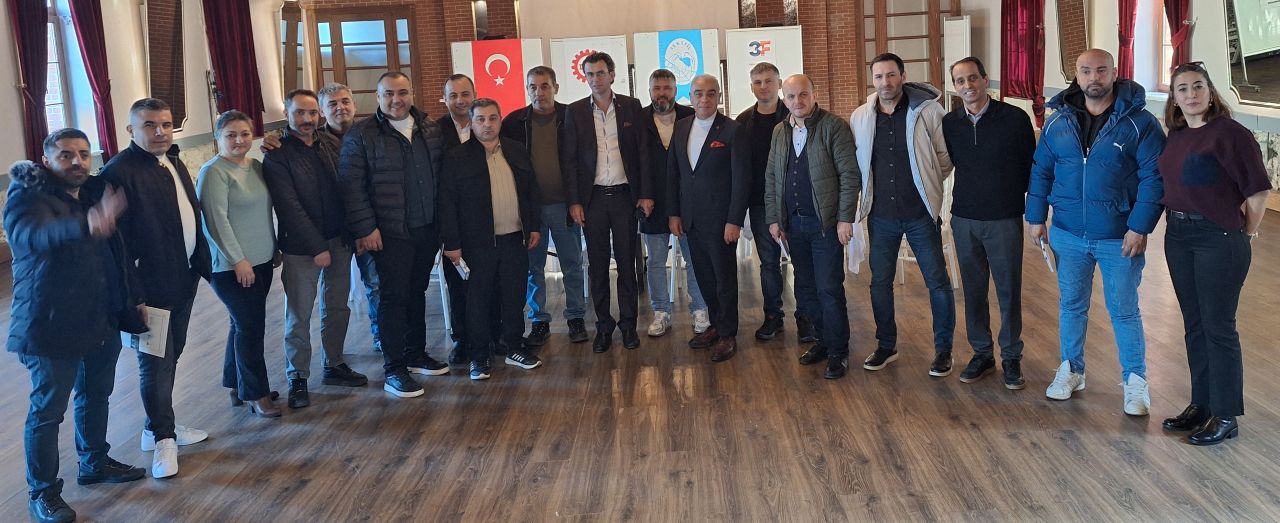
 Our workplace union representatives from Bursa, Gebze and Manisa attended the final training meeting of our union’s 2025 programme, held in Mudanya (Bursa) on 11 December 2025.
The training was organised within the framework of a joint project carried out together with our sister union 3F in Denmark and delivered a programme covering key topics for workplace representation.
The meeting was attended by our President Kazım Doğan; Executive Board member Birol Tan; Audit Board members Saffet Ünal and Göksel Geçit; Bursa Branch President İncigül Şentürk; Merter Branch President Asalettin Arslanoğlu; and our Organising Department expertBahadır Derin.
President Doğan opened the meeting with brief remarks and thanked all participants.
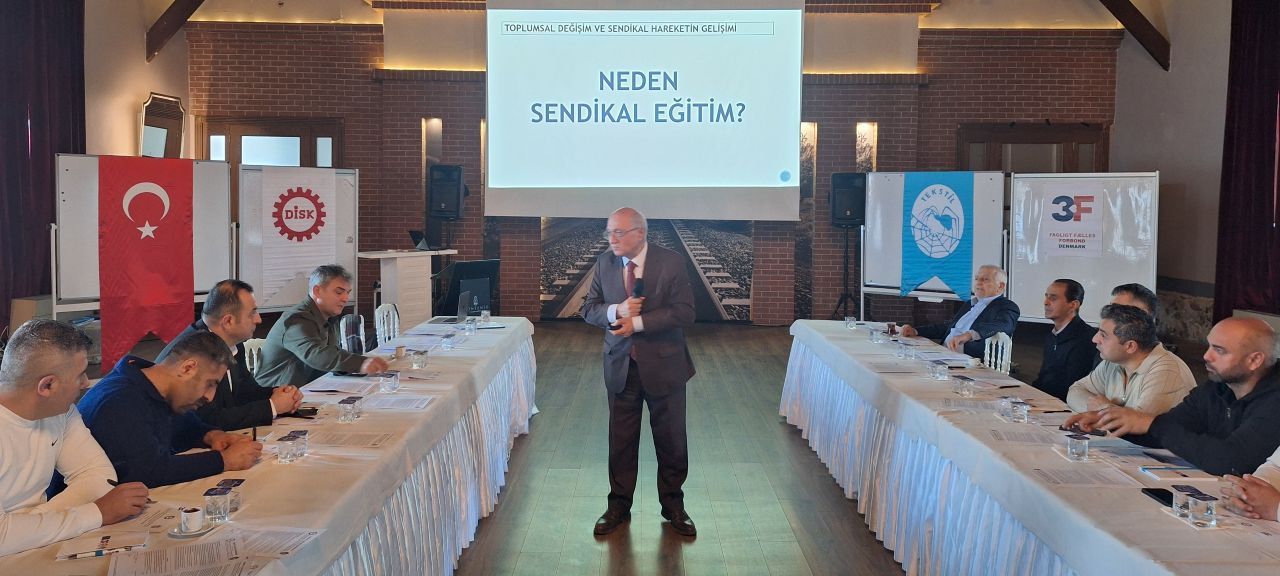
Held in two sessions (morning and afternoon), the first presentation was delivered by Üzeyir Ataman, Head of the Training Department at Lastik-İş. He spoke about why workers need to know their own history, the formation of trade unions in the world and in Türkiye, and achievements won through trade union struggle.

The second presentation was delivered by Merter Branch President Asalettin Arslanoğlu. Linking organising work with fundamental workers’ rights, he explained key elements of effective organising. He highlighted the legal regulations that representatives who also act as organisers should be familiar with and outlined how strategic and tactical steps in workplace organising can be planned.

The first presentation of the afternoon session was delivered online by ILO specialist Ayşe Emel Akalın. She explained the ILO’s standards on discrimination, the role of equality and fairness in preventing discrimination, and the importance of gender equality in working life. She also stressed that greater efforts are needed in Türkiye to secure ratification of the ILO Violence and Harassment Convention (No. 190) to prevent violence and harassment at work.

The final presentation was delivered by occupational safety specialist Murat Sarcan. Using examples from Türkiye and abroad, he discussed how occupational health and safety is perceived by employers and workers.
He also covered the selection, duties and powers of employee representatives under current legislation, as well as the formation and functioning of OHS committees, emphasising the life-saving impact of simple precautions.
Following the presentations, participants completed an evaluation survey. Throughout the sessions, they contributed with questions and comments, helping to ensure that the meeting was active and productive.